The Quiet Work of a Village Pond Edge
At a village pond in Blitar, the margin is not simply a line between water and land. Reeds, grasses, roots and shaded banks form a layered habitat, each offering different shelter and feeding places.
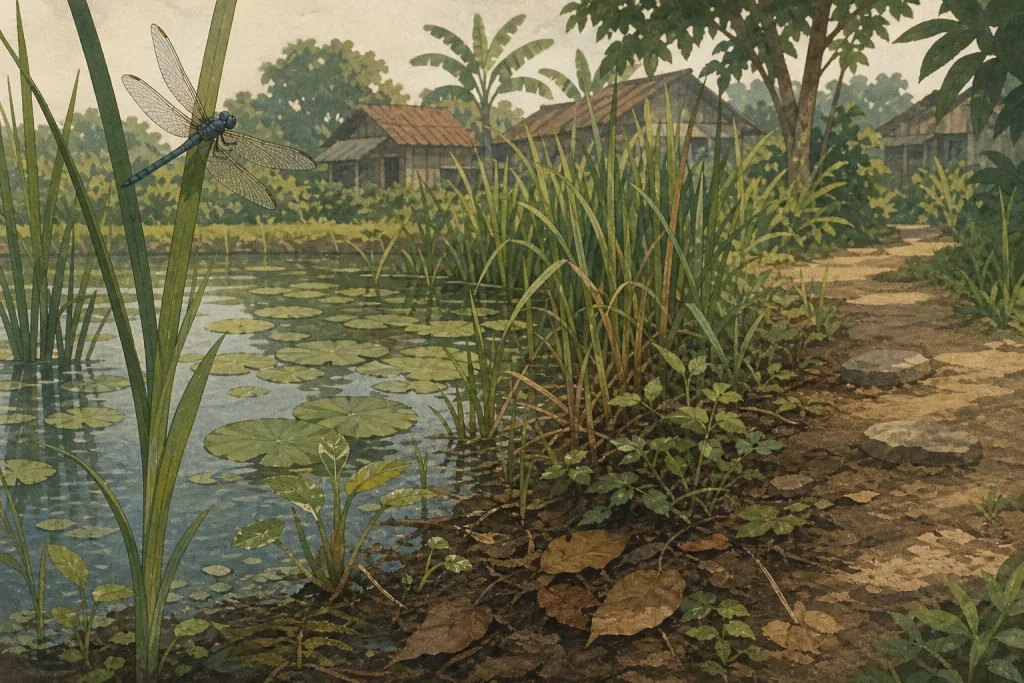
A dragonfly pauses on a reed beside a village pond, while damp leaves cling to the bank and floating plants shade the water. From a few steps away, the edge can look like one untidy strip. Walk along it slowly and its layers come into view: open water, stems, a wet fringe, low plants and firmer ground beyond.
In Blitar’s countryside, ponds sit among gardens, homes and cultivated plots. Their margins can offer shelter for small wildlife, but what suits one pond may not suit another. Bank slope, water movement, shade and existing plants all matter. A varied edge can include both sheltered patches and clear access; it need not be left wild from end to end.
Water and bank
Begin at the waterline. Floating leaves and submerged stems create cover, while upright plants break up an exposed surface. A shallow transition from water to land offers different conditions from a steep, bare edge. Mud, leaf litter and roots add further texture, though their presence alone does not tell you which plants will thrive there.
After rain, notice where water reaches the bank and whether soil or garden debris is carried towards the pond. A shaded corner may stay damp after a sunny stretch has dried. These observations help distinguish wet ground from merely moist ground and firm soil. Avoid treating every section alike.
Before adding plants, identify what is already growing. Ask a local gardener or someone familiar with the area’s plants to help distinguish suitable local growth from plants that may spread or crowd the water. Do not transfer plants, roots or fragments from another pond; they can carry unwanted species or material.
Stems and shelter
Reeds, sedges and other upright wetland plants can provide cover and perches. Their bases may also hold damp organic matter. A varied patchwork of clumps and openings is often more useful than a dense wall, but the right balance depends on the pond and its existing vegetation.
If trimming is necessary, cut selectively rather than clearing the whole margin at once. Keep some stems and leafy patches standing, and leave a clear route where people need access. A bare edge can expose soil to rain, while retaining every stem may block a path or view. Aim for a practical balance, not a fixed pattern.
Say you have a small pond, a narrow path on one side and reeds leaning across it at the far corner. You trim only the stems that obstruct the route, leave the remaining clump standing, and keep a separate viewing gap clear. The observable result should be a passable path alongside a patch of retained cover. If the stems are unfamiliar or spreading rapidly, pause and seek local identification before cutting or moving them.
Roots and soil
Existing rooted plants may help hold soil in place, but their effect depends on the bank, the plants and the way water reaches them. A patch of vegetation is not a dependable fix for serious erosion, and planting the wrong species can create new problems. If a bank is stable, leaving its existing cover undisturbed may be the most sensible choice.
Look closely before disturbing bare ground. If people repeatedly walk across it, define a route with a suitable stepping stone or another locally appropriate path material, provided it can be placed securely. If rainwater carries soil towards the pond, observe where the flow starts and ask a local pond caretaker or land-management professional for advice before redirecting it or planting a strip. Where erosion is substantial or the pond connects to a drain, get local advice before changing the bank.
Roots are like the stitching in a hem: easy to overlook, but part of what holds an edge together. That does not mean every creeping plant belongs beside water. Watch whether runners begin to smother slower neighbours or spread into unwanted places; if they do, identify the plant first, then ask a knowledgeable local person about a suitable response.
Shade and leaves
A nearby tree or shrub can cast a cool patch over the bank, while fallen leaves cover the soil and shelter small invertebrates. Conditions vary with the plant and the pond, so treat shade and leaf litter as features to observe rather than benefits to assume. A scattered layer on the bank differs from a thick accumulation in the water.
Notice where leaves collect. If they are building up in a quiet corner and obstructing water or access, remove only what is needed and leave some litter among the bank plants. If leaves are not causing a problem, avoid raking the whole margin bare for appearance alone.
Shade shifts through the day and with the seasons. Before moving a plant or cutting branches, check which parts of the bank are shaded at different times. If substantial tree pruning is needed, consult a qualified tree-care professional.
Paths and openings
A pond edge can offer shelter while remaining accessible. Keep a clear place for drawing water, checking the pond or sitting nearby, but avoid turning every stretch into a path. A small viewing gap between plant clumps may be enough.
Where creatures reach the water, a gentle slope or rough, stable surface may give them a way back out. Do not assume a loose stone or steep bank is safe: check that any access stones are secure and do not create a trip hazard. For a pond used by children, follow ordinary water-safety precautions and supervise closely; landscaping cannot replace supervision.
Keep paths on firmer ground where possible. If an informal track is widening, mark a narrow route with suitable local materials and observe whether people use it. If they keep walking through the wet fringe, reconsider the route rather than clearing more vegetation. Change one section at a time so the rest of the edge remains undisturbed.
Seasonal observations
Return to the same spot after rain and during dry weather. Note where water spreads, where soil moves and which areas stay damp. When stems flower, avoid cutting them all before their cycle has finished. These observations can help you decide whether a change is needed, but they do not replace local knowledge of the pond’s plants and water.
Imagine a pond with a new bare patch beside a garden path. You notice that it follows the route people take to reach the water, rather than appearing where runoff enters. You mark a firmer route along the bank and leave the wet fringe alone. If the bare patch stops widening, the route may be addressing the trampling; if it keeps spreading or soil begins washing into the pond, pause further changes and ask the caretaker or a local land-management professional to assess it.
Before removing an unfamiliar plant or moving soil, check whether local rules apply and ask the pond’s owner or caretaker. Neighbours who know how the water behaves across the seasons may help distinguish a temporary change from a persistent issue. Keep notes on where you observed the change and what you altered; that makes it easier to explain the situation and decide what to do next without disturbing more of the pond edge than necessary.