Bamboo from Culm to Woven Basket
Follow bamboo from careful selection and strip preparation to a balanced base, shaped sides and finished rim, with practical checks for visible faults and clear limits on what appearance can tell you about carrying safety.
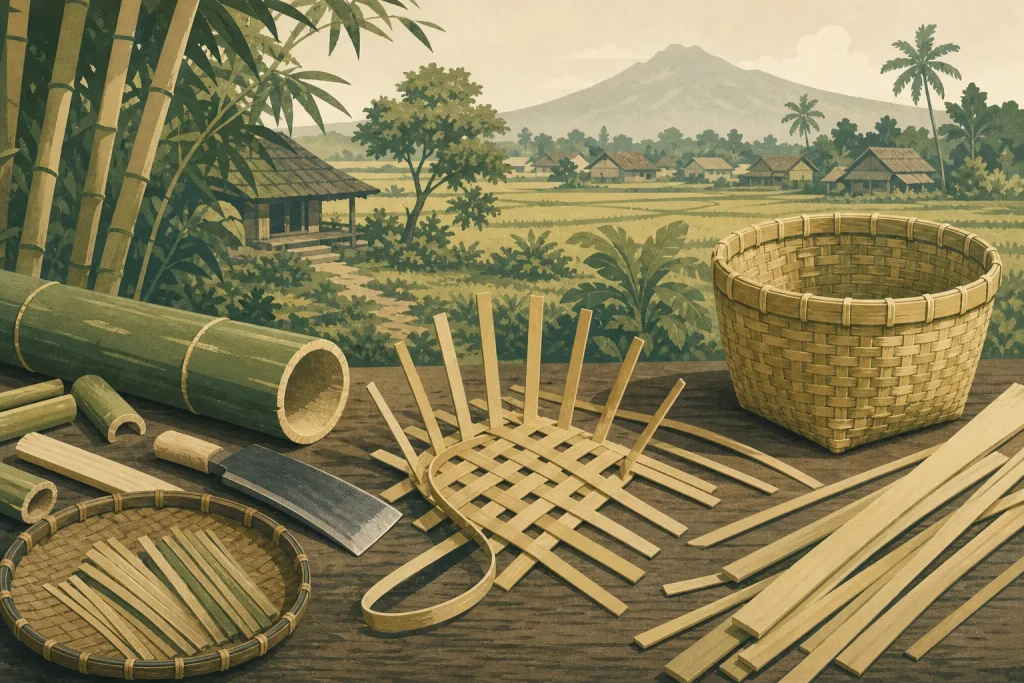
At a village workbench in Blitar, a bamboo culm rests beside a cleaver and a shallow basket with a worn rim. The maker turns the stem, checking for soft patches and splits before deciding which sections might suit the base, sides or rim. That inspection is only the start: species, preparation and intended use all shape the choices that follow.
Choosing bamboo
Look along the whole culm for rot, insect damage, soft spots and deep splits. Check the raised rings, called nodes, and the spaces between them. A surface mark may leave other sections usable; a long split or soft area calls for a different piece. Ask a Blitar basket maker which bamboo and culm sections are commonly suited to the design you have in mind, since material and local methods vary.
Decide what the basket is for before preparing the strips. A container for light garden produce may be designed differently from one intended for regular carrying. In either case, appearance alone cannot establish strength. Ask permission before cutting bamboo on someone else’s land, and take only what you need.
Fresh bamboo and dried bamboo can split and bend differently, and a very wet strip may be awkward to handle. Follow the preparation method used by a knowledgeable local maker for the material at hand. Use a sharp, clean cleaver on a stable surface, keep your hands out of the blade’s path, and ask for a demonstration if you have not used the tool before.
Preparing the strips
Trim damaged ends, then cut the culm into manageable lengths. Split each length along its grain before reducing it to strips. Work with the fibres rather than forcing a cross-cut that leaves ragged edges. Separate the outer skin from the inner layer only if the chosen weave calls for it; ask a local maker which parts are used for the base, body and rim.
Sort the strips by their intended role. Set aside the pieces selected for the base and rim, and keep finer strips for the body if that suits the weave. Compare their width, thickness and flexibility by hand. Shave away only a bulky edge; removing too much from one side can leave a strip weak or liable to curl. Think of a stack of cards: one uneven card makes it rock, just as irregular splints can leave bumps and loose crossings.
If a strip resists bending, pause rather than forcing it until it cracks. Depending on the bamboo and local practice, a maker may let it rest or lightly re-moisten it. Keep prepared strips out of strong sun and drying wind while you work. Set aside pieces with splits or weak spots instead of hiding them in the weave.
Weaving the base
Lay the lengthwise stakes in a balanced arrangement, then cross them with another set at right angles. Weave a working strip over and under the stakes, keeping crossings close while checking that the base lies flat. The arrangement depends on the basket’s shape and local style, so have a craft worker show you the pattern suited to your design before committing to the first rows.
Say you are making a small basket for gathering garden vegetables. Your starting materials are sound, sorted stakes and a flexible working strip. After weaving the first rows, you see one corner drawing inward. Pause, loosen the tight crossings, redistribute the stakes and continue with even tension. The expected visible result is a base that sits more evenly on the bench; that appearance does not establish how much weight the finished basket can safely carry.
As the base grows, check that the stakes remain evenly spaced. If one side pulls tighter, ease the weave rather than yanking it; forcing a strip can split a stake or leave gaps. For a rounder base, spread the stakes gradually as you work the early rows, following the shape shown by your chosen pattern.
Raising the sides
Once the base is firm enough to hold its shape, bend the projecting stakes upwards in a gradual curve. Pass the weaving strip alternately inside and outside each upright, keeping the rows close without crushing them together. A steady rhythm makes a missed crossing easier to spot before later rows cover it.
If a stake begins to split, stop and ask a knowledgeable basket maker whether to replace it or alter the design. A neat-looking repair does not establish that the basket is fit for carrying. Choose the shape while the sides are still low: gently flared sides may suit one task, while straighter walls may suit another.
Securing the rim
The rim gathers and secures the upright stakes. Use a method and materials suited to the bamboo and weave, with guidance from a local maker if you are learning. Trim and tuck the stakes as the chosen pattern allows, then inspect for loose loops, sharp ends and sections that sit unevenly. Smooth rough edges carefully with a knife or scraper, directing the blade away from your hands.
A separate handle needs careful attention at its attachment points. A tidy finish cannot show how much weight the handle will bear. If you cannot judge the fastening, ask an experienced basket maker to inspect it and follow their advice about the basket’s intended use.
Care and inspection
After use, brush away soil and plant debris, then let the basket dry in a sheltered, airy place rather than harsh sun or a damp corner. For a basket intended for food, ask a knowledgeable local maker or food-safety professional about suitable materials and cleaning. Do not assume bamboo or a finish is appropriate simply because it looks clean.
- Check whether a split runs through a stake. If it does, stop using the basket for carrying and ask a craft worker whether repair is suitable; if it does not, continue to the handle and rim checks.
- Check whether a handle attachment moves, opens or pulls away under a gentle hand inspection. If it does, do not carry a load by that handle and seek a maker’s advice; if it does not, remember that a firm-looking attachment still does not establish a safe load limit.
- Check whether the base has loose crossings or a stake that shifts. If it does, keep the basket for light, non-carrying use until a craft worker assesses it; if it does not, inspect the sides and rim rather than assuming the basket is safe for any load.
- Check whether the rim has a loose loop or sharp exposed end. If it does, set the basket aside for repair before handling it or adding contents; if it does not, continue checking the body for visible damage.
- Check whether mould or persistent dampness is present. If it is, avoid food use, dry and clean the basket only in a way suitable for its material, and seek local advice if the problem remains; if it is not, store the basket in a dry, airy place.
- Check whether the intended load and the condition of the bamboo are known. If either is uncertain, do not infer a safe carrying capacity from appearance—ask a qualified craft worker and use another carrying method meanwhile; if both are known, follow the maker’s guidance for that use.
These checks reveal visible damage; they do not certify strength. A basket can look tidy and still have a weak point hidden in a crossing or fastening. For a heavy, valuable or otherwise consequential load, use a purpose-made carrier with a stated capacity or ask a qualified craft worker to assess the basket. Do not discover its limit by loading it until something gives.
When preparing another basket, keep sound offcuts separate from damaged pieces and note which part of the culm they came from. Showing those pieces to a local maker can help you understand how they split and bend. Let the intended use guide material and design choices, and treat carrying capacity as an unanswered question unless the maker has assessed it.