The Seasonal Clearing of a Yard
In Blitar’s villages, clearing a yard is less about making every corner spotless than responding to rain, fallen leaves, drying crops and the work ahead.
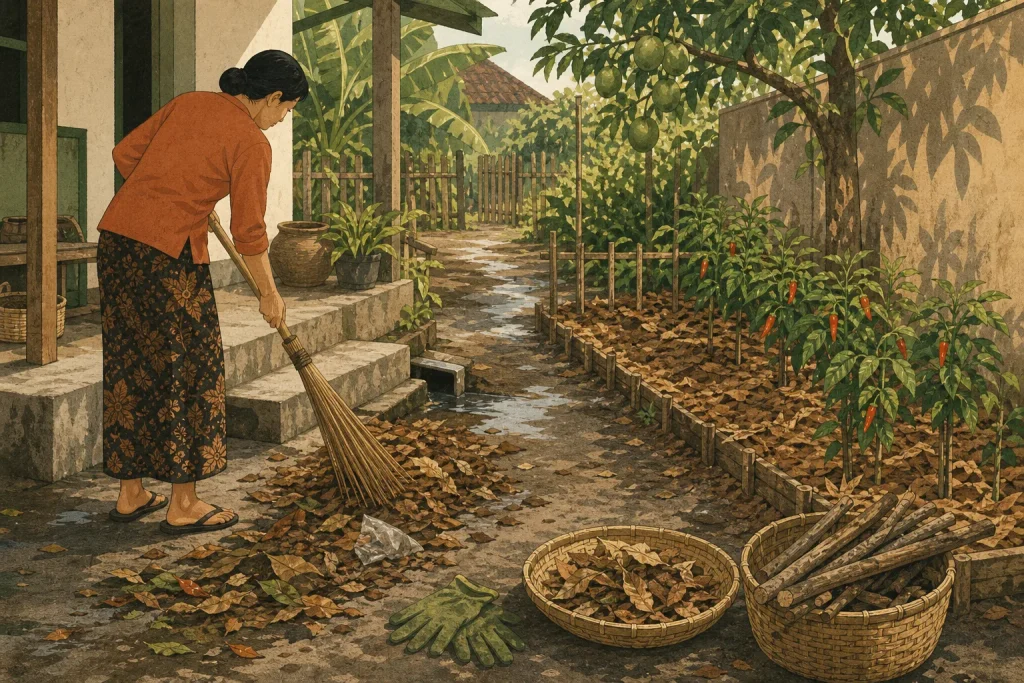
After a night of rain, damp leaves gather beside the kitchen steps. Someone lifts them with a bamboo broom, checks that the drain is open and sets dry twigs aside near the cooking area. In a Blitar yard, this small sweep can be part of a seasonal routine: clear what is in the way, keep useful materials close and make room for the next turn in the weather.
Let the yard’s condition guide the work. A low corner that holds water needs different attention from a sunny patch used to dry cassava or a strip beneath fruit trees. Think of the task as sorting, not clearing everything away: keep what has a purpose, move what is becoming a nuisance and leave living soil protected.
After heavy rain
Start by tracing water’s route through the yard. Look at the drain mouth, the ground near steps and any narrow run-off channel beside a house or garden bed. If leaves, plastic scraps or loose stems obstruct an open drain, remove the loose material with a broom or gloved hand; if water remains backed up or the channel looks unstable, stop and ask someone qualified to assess it rather than probing a pipe or ditch.
Sort wet plant matter from household rubbish. If leaves and soft trimmings are accepted for composting in your household or community, put them in the usual compost area, away from doorways and paths. If there is no suitable composting arrangement, follow the local collection or disposal practice instead. Keep plastic packaging out of compost, and do not bury or burn it.
For a bare patch where rain has carried soil towards a path, first check that the patch is not part of a drain or a route water needs to follow. If it is ordinary garden soil, and the leaves are clean and free of diseased material, spread a loose covering over the exposed surface; if leaves could wash into a drain, collect them or use a more secure ground cover suited to the spot. Like a woven mat, a loose leaf layer can shield soil, but it should never block water’s route.
Before a dry spell
As the weather turns drier, focus on plants and stored materials. If weeds are crowding young vegetables, pull them carefully; if established groundcover is holding soil in place, leave it. Gather sound fallen branches for kindling or simple repairs and keep them in a dry, airy place rather than a tight, damp heap.
Check pots, seedling trays and beds near the house. If a path to a water container is obstructed, move tools or containers aside so it is easy to reach. A loose layer of dry leaves may help cover soil around established plants, but keep it away from stems; leave small seedlings uncovered enough for their leaves to receive light and air.
Say you have a narrow bed of chilli plants beside a sunny wall, with clean, dry leaves collecting along its edge. Rake some leaves into a loose covering between established plants, pull weeds by hand, and leave a clear strip for access. If the leaves start to blow into the path, gather them into a local compost area or another suitable place instead. The bed stays accessible, and the path remains clear for carrying water.
For harvest work
When fruit, vegetables or other household crops are being gathered, clear a work area rather than the whole yard. Sweep a firm patch near the house, remove anything sharp or muddy, and set out a clean mat, tray or woven bamboo container for sorting. Keep harvested food apart from compost, rubbish and animal feed. Choose a clean, shaded, airy place for produce that could wilt in direct sun, and follow familiar safe handling practices for crops that need particular care.
Sort leftover plant material promptly. If stems are sound and useful, set them aside for supports or kindling. If material is soft, diseased or unfamiliar, keep it out of compost used around food crops; ask a knowledgeable local grower how to handle it. Do not mix crop scraps with harvested food or put questionable plant matter where people or animals may handle it unknowingly.
Consider the actual route for the day’s work. If a basket or tray cannot pass without catching on tools, move the tools to one side; if a drying rack is in use, ask before shifting it. Return tools and containers to an agreed place when the task is done, so the yard is ready for the next job.
When leaves fall
Under fruit trees and along fences, fallen leaves can be useful. If leaves are clean and not smothering young plants, leave some in a loose layer beneath trees. If they gather on paths or in drains, collect them and handle them according to local composting or disposal practice. A bare, swept-earth yard may look orderly, but exposed soil can be more vulnerable to sun and rain than soil with a light organic cover.
Do not treat every fallen branch or seedling as rubbish. If a straight, sturdy twig is in a safe place, it may serve as a plant support; if a volunteer plant is identifiable and growing where it will not obstruct work, consider leaving it. Remove thorny growth, diseased leaves and branches that catch on clothing or block a doorway. The point is not to preserve every scrap, but to notice what has a useful next purpose.
For a shared yard
Where several people use the same space, agree on where compost, firewood and household waste belong. One person might clear the entrance while another sorts a leaf pile, but check first that nobody needs the area for drying, washing or food preparation. A broom, hand rake, gloves and sturdy basket are often enough for routine clearing. If sharp tools are needed, keep them out of the main walkway when not in use.
- If leaves are blocking the drain mouth, remove the loose leaves; if the blockage continues or the channel seems unsafe, stop and seek qualified help instead of forcing a tool in.
- If plant scraps are clean and your household or community accepts them for compost, put them in the designated pile; if not, use the local collection or disposal route.
- If a bare patch is ordinary garden soil and clean leaves will stay in place, spread a loose cover; if it is a water channel or leaves would wash into a drain, leave it clear and choose another suitable way to protect the soil.
- If dry leaves around established plants stay away from stems and do not blow onto paths, leave the light covering; if they smother seedlings or make the path slippery, pull them back or collect them.
- If harvest produce has a clean, shaded, airy sorting place, use it; if the area is muddy or shared with rubbish, clear another clean surface before handling food.
- If a branch is sound, manageable and stored in a dry, airy spot, set it aside for a useful purpose; if it is diseased, unstable or obstructing a route, keep it out of the work area and seek local advice where needed.
- If a drying rack or shared corner is in use, ask before moving it; if the space is needed for urgent access, agree on a nearby temporary place with the person using it.
Leave what protects
Some corners should not be stripped bare. Keep soil covered where roots help hold a slope, preserve useful plants that provide shade or household materials, and avoid disturbing wildlife you cannot identify. If a tree limb looks unstable above a frequently used area, or a drain problem is beyond ordinary clearing, ask someone qualified to assess it rather than tackling it alone.
Say a household has a rain-washed patch beside a path, a drain that still flows, and a small pile of clean leaves. They first confirm the patch is garden soil, not part of the water channel; then they move leaves away from the drain, spread a loose layer over the bare soil, and sweep the path clear. If rain carries that layer towards the drain, they collect it and leave the channel unobstructed. The result is a covered patch and a clear route for water, with the choice adjusted to what the next rain actually does.
Before finishing, check the route people use and the route water takes. Clear the path before carrying a basket, keep drains open, and set aside plant matter only when its next use and local handling are clear. A useful seasonal sweep leaves the yard ready for daily work without stripping away what protects the soil.